 English (UK)
 Italiano


Behind the beach lies a protected wetland where water, dunes and Mediterranean vegetation come together to form one of the most fascinating natural habitats in northern Sardinia.
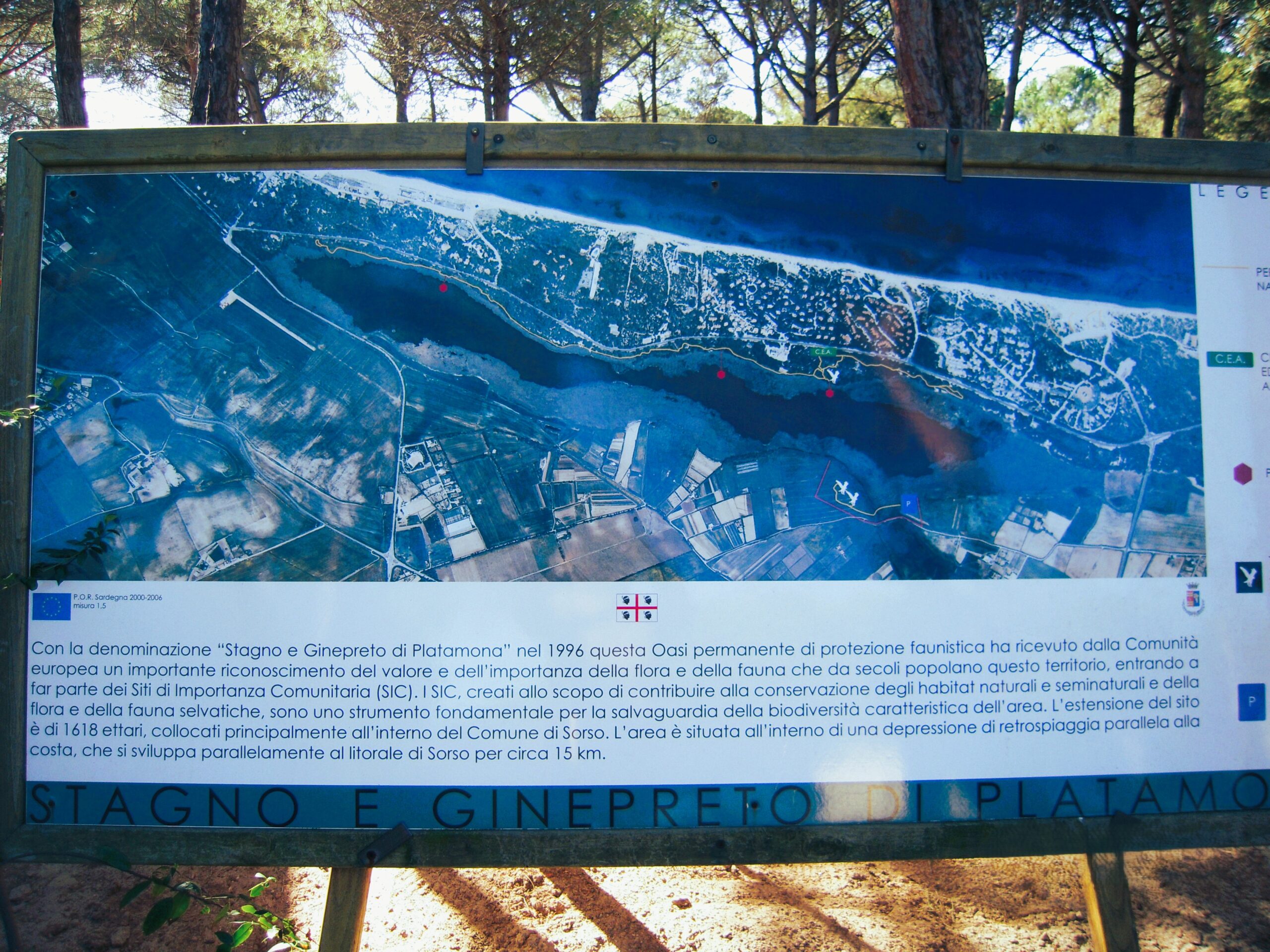
Just a short walk from the coastline of the Gulf of Asinara, in the municipality of Sorso, lies the Platamona pond and juniper grove, a natural area of great environmental value.
Here, the landscape changes: the sea gives way to a stretch of water surrounded by reeds, junipers, Mediterranean scrub and pine forests.
It is a place best explored at a leisurely pace, whilst being mindful of the delicate balance of its ecosystem.
Platamona Lake: a natural environment worth protecting
The pond runs parallel to the coast, behind Platamona beach.
It is a coastal wetland, linked to a system of dunes and vegetation that contributes to the ecological richness of the area.
The water, the reed beds and the surrounding areas provide favourable conditions for a wide variety of animal and plant species.
The pond is not a place intended for swimming, but a natural environment to be observed and respected.
Juniper scrub and Mediterranean vegetation
One of the site’s most distinctive features is the juniper grove, which contains some remarkably large specimens.
Alongside the junipers, other species of Mediterranean scrub grow, whilst in the wetlands there are reed beds and vegetation adapted to the presence of water.
There are also stretches of pine forest, which add to the variety of the landscape.
These habitats play an important role in protecting the dune system and conserving biodiversity.
The birds on the pond
Wetlands are vital habitats for numerous species of birds.
In the Platamona area, under favourable conditions and at certain times of year, herons, wild ducks, marsh harriers and other waterbirds can be spotted.
Among the species of particular conservation interest is the sultan chicken, which is associated with habitats rich in marsh vegetation.
Wildlife watching requires patience and discretion: the presence of animals cannot be guaranteed and varies with the seasons and environmental conditions.
A site in the Natura 2000 network
Platamona pond and juniper grove form part of the Natura 2000 network, the European system of areas dedicated to the conservation of habitats and species of Community interest.
The site is identified by the code ITB010003.
The conservation measures cover a series of interconnected habitats: the wetland, the coastal vegetation, the dunes and the juniper scrub.
Protecting this heritage means preserving not only the landscape, but also the conditions necessary for the survival of the species that inhabit it.
How to visit Platamona Lake
The area is situated behind the Platamona coastline and can be reached from Sorso and Sassari.
To explore the site, it is important to use only the authorised access points and routes, whilst observing the signage in place.
The terms and conditions of use, the availability of guided tours and any environmental education services may vary over time.
Before organising an excursion, particularly with groups or school parties, it is advisable to seek information from the relevant local authorities.
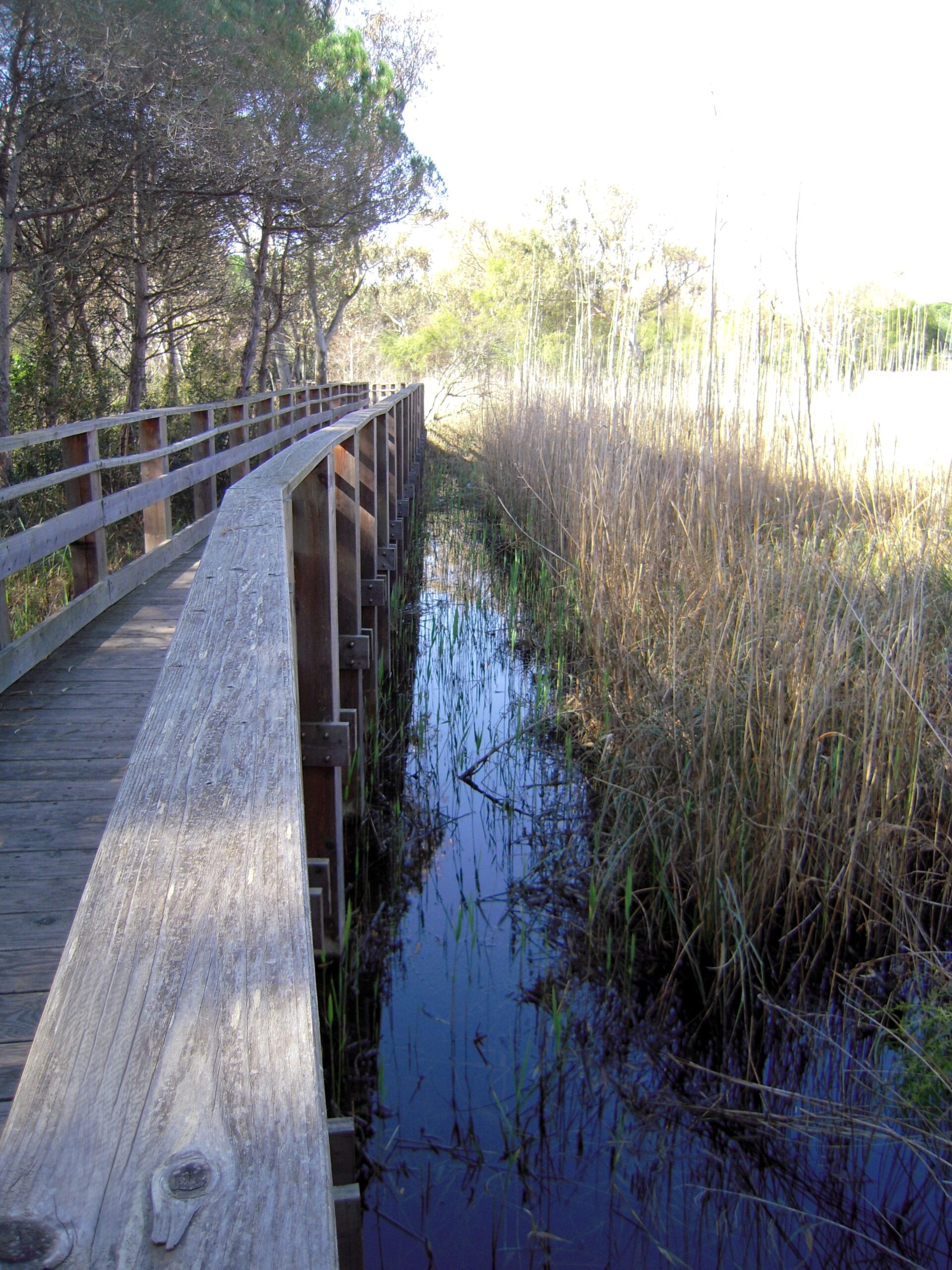
A place to explore with respect
A visit to the lake can be an opportunity to get closer to the natural beauty of Romangia, even outside the bathing season.
To help protect it, all it takes is a little care: do not leave rubbish behind, do not disturb the animals, do not pick plants and do not stray from the authorised paths.
Taking photographs of the landscape and observing wildlife from a distance are simple ways to experience this environment without disturbing it.
Frequently Asked Questions about Platamona Lake
Where is Platamona Lake?
In the Sorso area, behind the beach of the same name, on the Gulf of Asinara.
Is Platamona Pond a protected area?
Yes. It forms part of the Natura 2000 site known as ‘Platamona Pond and Juniper Grove’, identified by the code ITB010003.
What animals can you see?
The birds found in the area include a number of aquatic and marshland species, such as herons, wild ducks and marsh harriers. Sightings depend on the time of year and environmental conditions.
Can you visit it freely?
Visitors must adhere to the permitted access routes and any safety measures in place. It is advisable to check the latest information before your visit, particularly for organised excursions.
For further reading
- Platamona Beach
- Sorso: what to see in the historic centre, amongst the wine and the sea
- Sennori: what to see – from archaeology and traditions to vineyards
- Romangia: what to see amongst the vineyards, villages and the sea
Sources and references
- Municipality of Sorso – Management Plan for the Natura 2000 site
- Municipality of Sassari – Platamona Beach
AI Disclosure
This content was produced by Antonio Casu with the support of OpenAI’s artificial intelligence tools (ChatGPT) for research, source analysis and editorial support, under the author’s supervision and responsibility.