 English (UK)
  Italiano

Small in size, yet surprising for the wealth of history it holds.
Borutta, in the heart of Meilogu, is one of those Sardinian villages that invite you to slow down. The hill of Sorres towers above the village, with its unmistakable Romanesque basilica of San Pietro di Sorres; at the foot of the hill lies the Ulàri Cave, which has been inhabited by humans since prehistoric times.
Within just a few kilometres, you can experience archaeology, the Middle Ages, Benedictine spirituality, nature and traditions that are still very much alive.
A small area, but a journey spanning millennia.
✅ Borutta and the Ulàri Cave: a story that began in prehistoric times
The oldest traces of human presence in the area lead to the Grotta di Ulàri, or Sa Rocca Ulàri, carved into the limestone cliff beneath the hill of Sorres.
The cave extends for around 350 metres and contains evidence of human occupation dating from the Neolithic period through to the Middle Ages.
Its presence was particularly significant during the Ozieri Culture and the early Eneolithic period, when the cave was also used for habitation and burial purposes.
Today, Ulàri is also of significant ecological importance: five species of bat live and breed there.
To protect this delicate ecosystem, access to the cave is restricted.
✅ The village of Borutta
The village lies in the valley of the Rio Frida, at the foot of the Sorres hill.
Its ancient name, Gruta, refers precisely to the presence of the cave and bears witness to the extent to which this natural feature has shaped the identity of the place.
As you stroll through the small historic centre, you’ll come across traditional houses, murals, ancient fountains and the public washhouse.
Among the religious buildings, the parish church of Santa Maria Maddalena, built in the 18th century, and the church of Santa Croce, which retains traces of its original Romanesque layout, are well worth a visit.
✔ The community’s memory: ‘Sa Bèrtula’
In the historic centre, the Giovanni Carboni House Museum is home to “Sa Bèrtula”, an ethnographic exhibition dedicated to the community’s material heritage and everyday life in the past.
The name is derived from sa bèrtula, the traditional Sardinian saddlebag associated primarily with farming and pastoral life. Objects and artefacts from the local culture thus help to tell the story of Borutta through the lives of the people who once lived there.
The House Museum is open during cultural initiatives and events: before planning a visit, it is advisable to check the access arrangements with Borutta Town Council.
But to truly understand the history of Borutta, you need to head up towards Sorres.

✅ San Pietro di Sorres: the symbol of Borutta
The Basilica of San Pietro di Sorres is one of the most important examples of Romanesque architecture in Sardinia.
Construction of the ancient cathedral began in the second half of the 12th century and proceeded in several phases until the first half of the 13th century.
The alternation of light-coloured stone and dark volcanic stone creates the distinctive two-tone effect that characterises both the façade and the interior spaces.
On the step of the doorway is the inscription Mariane maistro, interpreted as a possible signature of the master craftsman responsible for a phase of the work.
For over three centuries, St Peter’s was the episcopal see of the Diocese of Sorres.
In 1503, the diocese was incorporated into that of Sassari, and in the early 16th century, Sorres ceased to function as a cathedral.
Difficult centuries and periods of neglect followed, until restoration work began between the 19th and 20th centuries.
Since 1950, the Benedictine presence has breathed new religious and cultural life into the hill. The present monastery, built next to the ancient cathedral, became an abbey in 1974.

✅ The Benedictine Monastery
San Pietro di Sorres is not just a monument to visit.
It is a place that is still full of life.
The Benedictine community structures its days around prayer, work, study and hospitality, in keeping with monastic tradition.
The complex comprises the cloister and the library, which houses tens of thousands of volumes.
The Foresteria di San Pietro di Sorres also welcomes individuals and groups who wish to spend time on a retreat, take part in cultural activities or simply experience the atmosphere of the monastery for a few days.
✅ The Cathedral Museum
To find out more about the history of Sorres, you can also visit the Museum of St Peter’s Cathedral.
The exhibition brings together archaeological finds and artefacts from the hill and the surrounding area of Borutta, documenting a human presence that spans millennia.
The tour also offers an in-depth look at the history of the ancient diocese, the evangelisation of Sardinia and the construction of the cathedral.
Of particular interest are the numismatic collection and the architectural materials from the ancient bishop’s palace and the restoration work carried out on the church.
✅ La Bastida di Sorres: when the Middle Ages return to the hill
The medieval history of Sorres is brought to life every year through the Bastida di Sorres, one of the best-known historical re-enactments in the area.
The event commemorates an episode traditionally dated to 1334, when the Doria family are said to have attempted to capture the fortification of Sorres, which was then in the area controlled by the Aragonese.
Contemporary sources on the re-enactment take a cautious approach to the precise reconstruction of the historical episode; La Bastida should therefore be seen primarily as a major project aimed at raising public awareness of and re-enacting the Sardinian Middle Ages.
Camps, battles, archers, horsemen, traditional crafts, music, dancing and educational activities transform the hill of Sorres, for a few days, into a place where visitors can experience the life and culture of the 14th century.

✅ Sa Festa de su Brou: community, faith and remembrance
Among the traditions that have been revived in recent years is Sa Festa de su Brou, linked to the religious heritage of the ancient diocese of Sorres.
The account of the festival recalls the celebrations of the Forania and the participation of the communities belonging to the ancient diocese, with processions and religious services followed by the communal sharing of broth and meat.
Today, this tradition is kept alive through religious celebrations, social gatherings and events dedicated to the history of the local area.
More than just a food festival, it is therefore an opportunity to rediscover the link between Sorres, the local communities and their religious history.

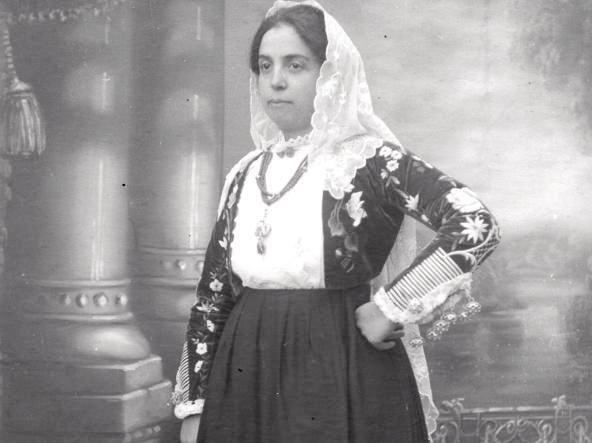
✅ Ninetta Bartoli: Borutta in the history of Italian women
Borutta also preserves an important chapter in Italian civil history.
On 10 April 1946, Giovanna “Ninetta” Bartoli was elected mayor of the town, joining the ranks of Italy’s first female mayors following the introduction of women’s suffrage.
He remained at the helm of the council until 1958.
During his terms of office, he promoted projects and services that were vital to the community and played an active part in the restoration of the San Pietro di Sorres complex.
A story that links this small Sardinian village to the wider trend of women’s participation in the political and administrative life of the Italian Republic.
✅ What to see in Borutta
A visit can easily be organised around a few key stops:
- Basilica of San Pietro in Sorres, the historical and spiritual heart of the area;
- Benedictine monastery and cloister, to learn about contemporary monastic life;
- Cathedral Museum, to learn more about the archaeology and history of the ancient diocese;
- Ulàri Cave, which can be visited in accordance with the rules laid down for the protection of the site;
- the historic centre of Borutta, featuring the churches of Santa Maria Maddalena and Santa Croce, fountains, a washhouse and murals.
In addition to these, there are events and traditions throughout the year that allow visitors to experience the local area through its community.

✅ Borutta: a small village, full of stories
Borutta doesn’t need a long list of attractions to impress.
Its strength lies in the concentration of different stories within a very small space.
The prehistory of the Ulàri Cave.
The Middle Ages and the ancient diocese of Sorres.
The Romanesque architecture of St Peter’s.
The simultaneous presence of Benedictine monks.
Le tradizioni recuperate dalla comunità.
E la storia civile di Ninetta Bartoli.
Qui il patrimonio non è fatto soltanto di monumenti.
È il filo che continua a tenere insieme luoghi, memoria e comunità.
🔶 Frequently Asked Questions
✔️ What is Borutta famous for?
Borutta is best known for the Basilica of San Pietro di Sorres, one of Sardinia’s most important Romanesque buildings, and for the adjoining Benedictine monastery. The area is also home to the Ulàri Cave and numerous historical and cultural sites.
✔️ When was San Pietro di Sorres built?
La costruzione iniziò nella seconda metà del XII secolo e proseguì in più fasi fino alla prima metà del XIII. La chiesa fu per secoli cattedrale dell’antica diocesi di Sorres.
✔️ Is it possible to visit the Monastery of St Peter in Sorres?
Some areas and facilities within the complex are open to visitors, and the monastery also has a guesthouse. Arrangements, opening hours and accessibility may vary: it is advisable to check the latest information before your visit.
✔️ Is the Ulàri Cave open to visitors?
The cave is a particularly sensitive archaeological and natural site, not least because of the presence of significant bat colonies. Access is regulated and must be carried out strictly in accordance with local regulations.
✔️ Was Ninetta Bartoli Italy’s first female mayor?
Giovanna “Ninetta” Bartoli, elected mayor of Borutta on 10 April 1946, is one of the first female mayors in Italy. National institutional sources do, in fact, record several women being elected to lead Italian municipalities in the various local elections of 1946.
✔️ What is the Bastida de Sorres?
It is a medieval re-enactment set on the hill of Sorres and inspired by an episode traditionally dated to 1334, linked to the clashes between the Doria and Aragonese. The event features camps, battles, traditional crafts and historical educational activities.
🔶 Sources
- Borutta Local Council – Official Tourism Portal: History of Borutta, Ulàri Cave, Basilica and Monastery of San Pietro di Sorres, Cathedral Museum
- Autonomous Region of Sardinia – SardegnaTurismo: Borutta and San Pietro di Sorres
- Chamber of Deputies – documentation on the first Italian women in public office
- Senate of the Republic – documentation on women’s representation in local government
- Ministry of Culture – National Portal for Historical Re-enactments: Bastida di Sorres
- Local and organisational sources relating to Sa Festa de su Brou and the Bastida di Sorres
🔶 For further reading
👉 Guest House of San Pietro di Sorres
👉 Borutta and San Pietro di Sorres: 70 years of monastic life
👉 Meilogu
AI Disclosure
This content was produced by Antonio Casu with the support of OpenAI’s artificial intelligence tools (ChatGPT) for research, source analysis and editorial support, under the author’s supervision and responsibility.