 English (UK)
  Italiano

🔷 Sardinian bottarga: the gold of the sea, blending tradition and authentic flavours
There are products that speak of a region even before words do. Bottarga is one of them.
Regarded as one of Sardinia’s most iconic culinary specialities, it stems from an ancient tradition linked to the sea and its lagoons. Its intense flavour, artisanal production and deep connection to the local area have made it famous far beyond the island’s borders, winning over food lovers all over the world.
Also known as “the gold of the sea”, bottarga is not just a prized ingredient: it is a story of fishermen, of traditions handed down through the ages, and of a culinary heritage that continues to embody Sardinia’s identity.
🔷 What is bottarga?
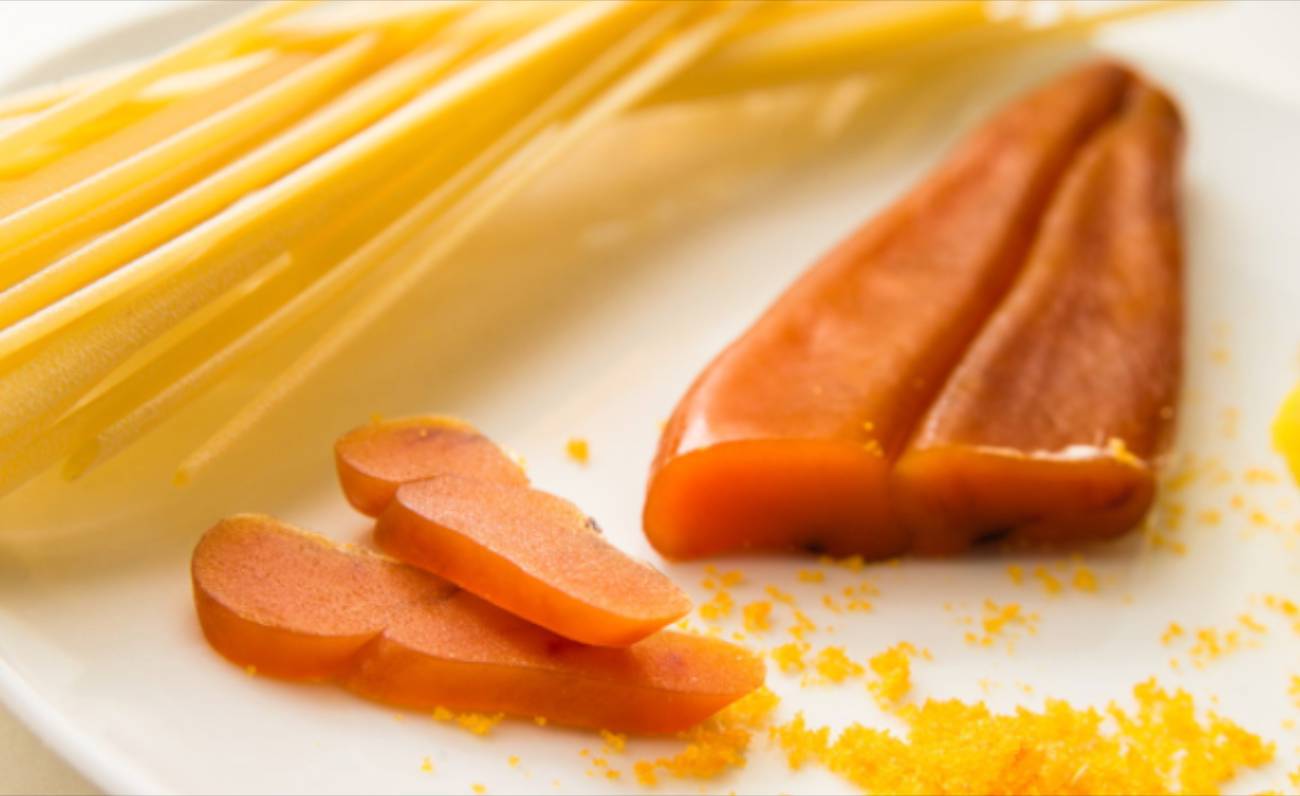
Bottarga is made from the ovaries of mullet or tuna, which are removed whole, salted, pressed and dried using a processing technique that is as ancient as it is simple.
In Sardinia, the most renowned variety is that made from mullet, prized for its elegant and harmonious flavour. Tuna bottarga, on the other hand, has a stronger, more intense flavour.
The result is a product with a golden-amber colour, a firm texture and the unmistakable scent of the sea.
🔷 Why is the Sardinian one so special?
The quality of Sardinian bottarga stems from the combination of three elements.
The first is the natural environment. The island’s lagoons and coastal ponds provide the ideal habitat for mullet, thanks to the balance between fresh and salt water and the rich biodiversity.
The second is the experience of fishing communities, which have for centuries preserved processing techniques handed down from generation to generation.
The third factor is time. Every bottarga requires a slow curing process that allows the product to develop its aroma, texture and balance.
It is this combination that makes it one of the most highly prized delicacies of Sardinian cuisine.
🔷 Where does Sardinian bottarga come from?
Production takes place in various coastal areas of Sardinia, but certain regions have come to symbolise this tradition.
The lagoons of Cabras, on the west coast, are among the best known and are one of the iconic locations for mullet bottarga. Also significant is the tradition of Marceddì, a small village overlooking the lagoon, as well as that of Sant’Antioco, where fishing culture continues to be part of everyday life to this day.
These are landscapes shaped by the wind, water and the migrations of waterbirds, where visitors to these unique environments are often accompanied by flocks of pink flamingos. It is here that one of Sardinia’s most authentic products is produced.
🔷 How do you like it?
Bottarga is a versatile ingredient that can enhance both traditional and contemporary cuisine.
It can be served:
-
grated over spaghetti with extra virgin olive oil;
-
on the fregula;
-
thinly sliced with carasau bread;
-
along with fish carpaccio and tartare;
-
as the finishing touch to creative recipes.
To preserve its full flavour, it is best to add it at the end of cooking, avoiding prolonged cooking.
