 English (UK)
  Italiano

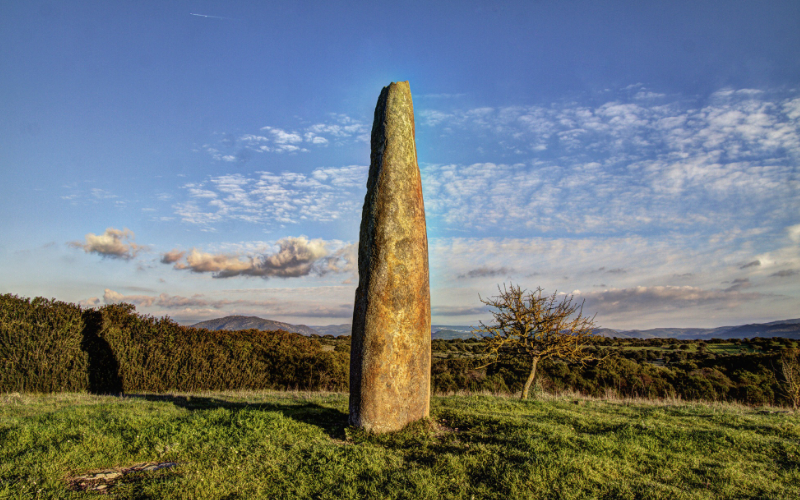
Ancient men turned to stone by eternal punishment, gigantic creatures living in inaccessible places, little fairies capable of weaving golden patterns among the mountain ridges. The legends of Sardinia arise from the need to give a name to what was once pure mystery and which, perhaps, will remain so forever.
An island of myths since its foundation, Sardinia is a continuous interweaving of stories, traditions and folk tales: every place seems to hold a secret, every stone a memory.
Myth as an explanation of the ancient world
Since ancient times, when knowledge was not yet sufficient to interpret natural phenomena, myths filled the void. Thus, fantastical worlds populated by fairies, giants, benevolent or evil spirits, saints and witches were born: figures that still inhabit the popular imagination today.
Among the most widespread legends are those linked to petrification: men and women turned to stone as divine punishment. Anger, adultery, greed, lust, avarice, rebellion: each menhir seems to tell of a sin, a warning, an inexorable fate. Forbidden lovers, arrogant queens, powerful men suddenly stripped of their power — all condemned to the hardness of stone to remind them that every action has a price.
But what really lies behind these narratives? Myths created solely to explain ancient monuments, or attempts to Christianise pagan symbols that were still too powerful to be erased? Probably both.
E per capirlo meglio, occorre osservare da vicino queste antiche architetture.
The “domus de janas”: homes of fairies and treasure troves of ancient knowledge
Origin and archaeological function
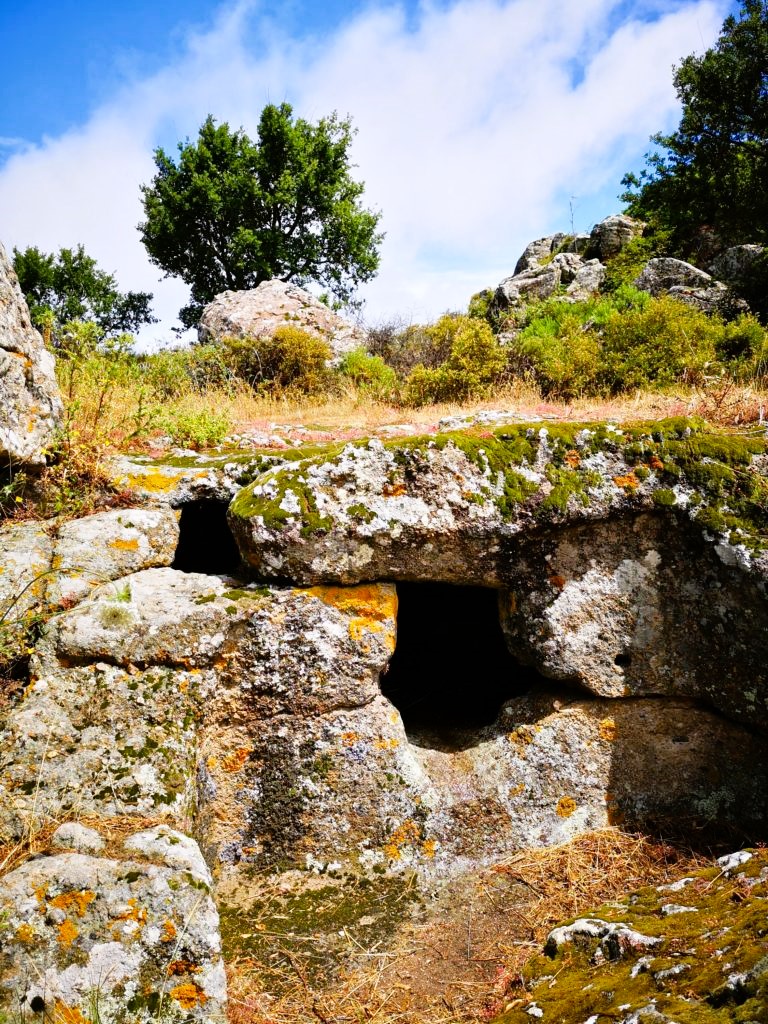
The domus de janas, "fairy houses", are underground tombs dating back to the 6th-3rd millennium BC, during the Ozieri Culture. Dug into the rock and consisting of one or more communicating rooms, they could form veritable necropolises. Their entrance, often via a dromos, led to a tall and spacious antechamber, sometimes marked by red ochre decorations.
The word janna means "door" and refers to the entrance to the afterlife. The internal structures probably reproduce prehistoric dwellings, complete with pillars, niches and sacred symbols: spirals, bull horns and geometric motifs with apotropaic value. The entire environment symbolically recalls the womb, the place of origin and rebirth.
The legend of the janas
Before archaeologists, however, it was folk tales that gave meaning to these mysterious cavities.
“The janas were small fairies, mostly evil, also called sas bìrghines."
Grazia Deledda describes the janas as 'little fairies, often evil', while other scholars – such as Dolores Turchi and Claudia Zedda – interpret them as benevolent creatures, endowed with great powers and ancient knowledge. They are neither fairies nor witches, but divine beings, guardians of treasures and secret arts: spinning, medicine, baking, prophecy.
Tiny creatures inhabiting the woods, considered the first women of Sardinia, they lived in small cavities carved into the rock.
Hence the name of the tombs.
Between myth, faith and continuity of places
Over time, many domus de janas were altered by illegal excavations, mining activities and grazing. Shepherds and farmers, finding themselves in front of unusually shaped rocks, would stop to rest and pray, associating those places with sacred presences.
With the advent of Christianity, pagan symbols were reinterpreted: engravings and scratches from the past became imprints of the Virgin Mary or saints.
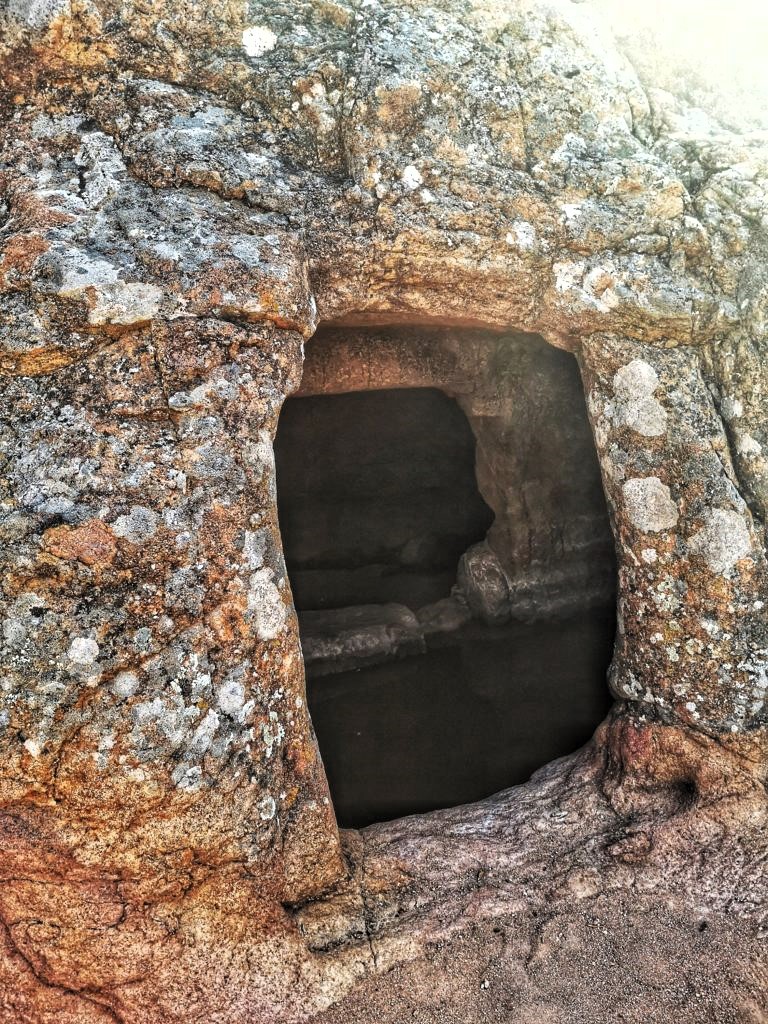
An emblematic example: “S’acqua ’e is dolus” (Settimo San Pietro)
The grooves in the antechamber were interpreted as the imprint left by St Peter's knees, who is said to have prayed there every day. The anniversary was celebrated on 29 June, then moved to early September.
A nearby spring, whose water filtered into the tomb, was considered miraculous, capable of 'soothing pain': hence the name. s’acqua ’e is dolus.
“Is perdas fittas”: menhirs and megalithic circles
Function and symbolism
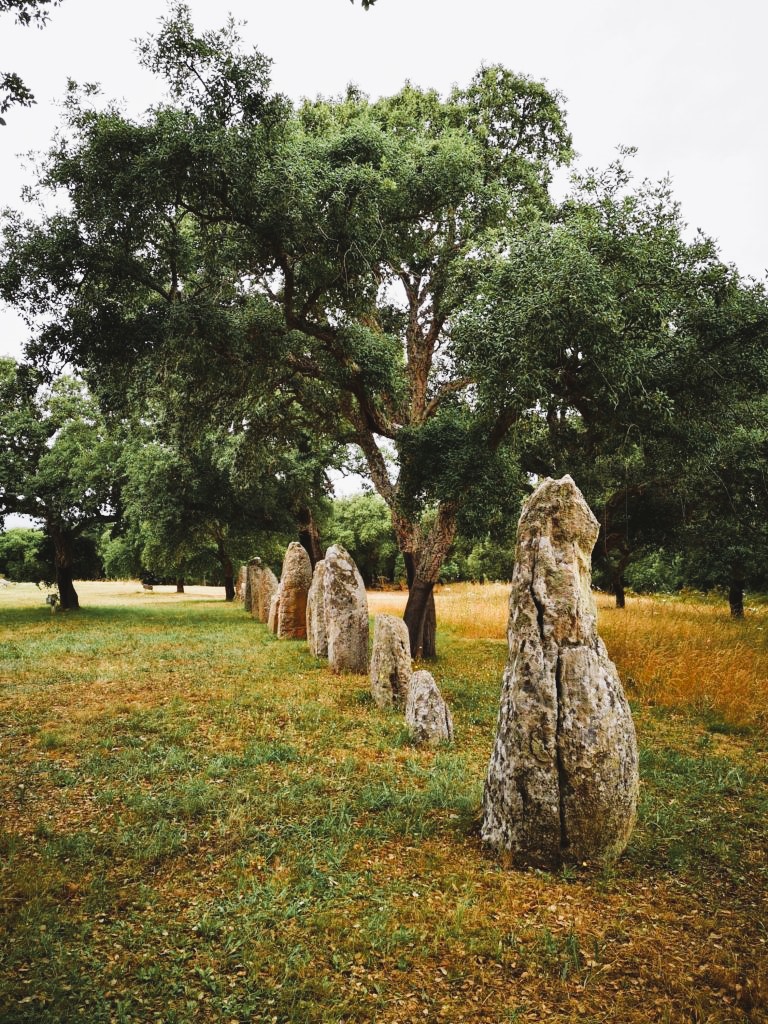
The menhir — "long stones" — are monolithic megaliths found throughout the Mediterranean, linked to cults, burials and territorial boundaries. Initially they were abstract idols, then they became more defined menhir statues, such as those in the Museum of Prehistoric Statues in Laconi.
They were erected individually, in alignments or in circles (cromlech), perhaps with a cultic function.
The megalithic circles
Typical of Gallura, but also found elsewhere, the circles consist of concentric circles of stones that supported a mound. At the centre was a stone cist where the deceased was laid in a crouched position, the body painted in red ochre.
Between one circle and another stand large vertical stems similar to menhirs.
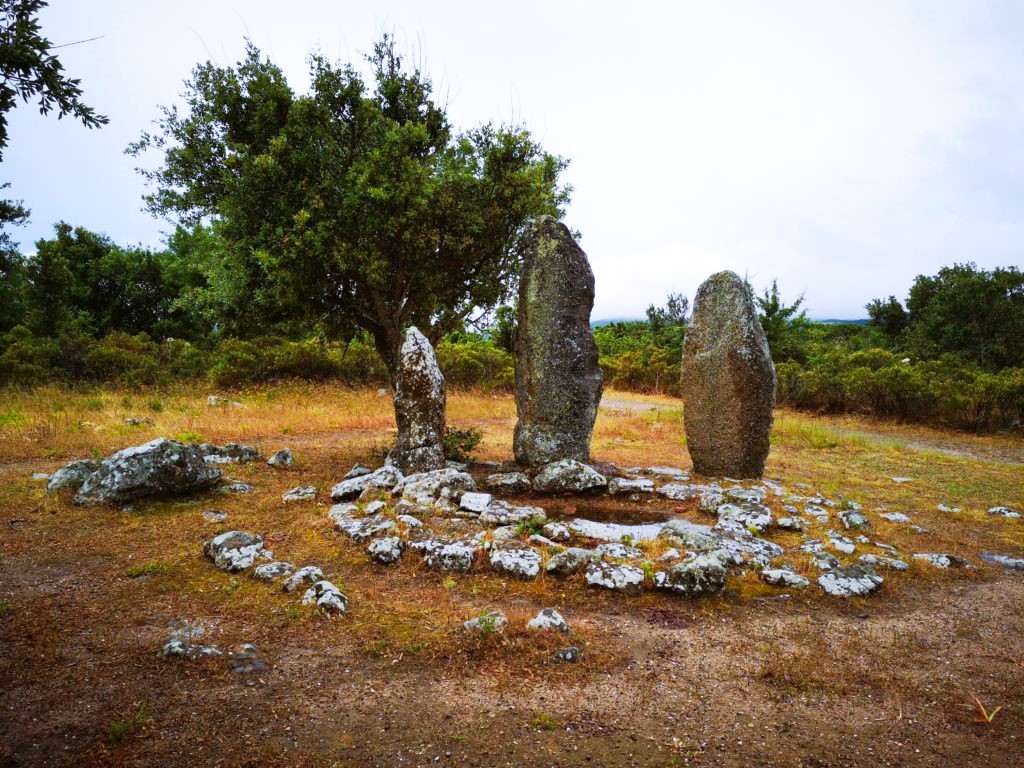
When stone becomes legend
Today, many alignments have been partially reconstructed, giving rise to the custom — and legend — of paired menhirs. The most common name is "su para e sa mongia", "the priest and the nun": according to tradition, two forbidden lovers turned to stone. It was common, in fact, to hear stories of love affairs that developed in places such as monasteries or convents. Even Grazia Deledda, in her book "La Madre" (The Mother), tells of a curse linked to a secret love between a priest, Paulo, and the beautiful Agnese.
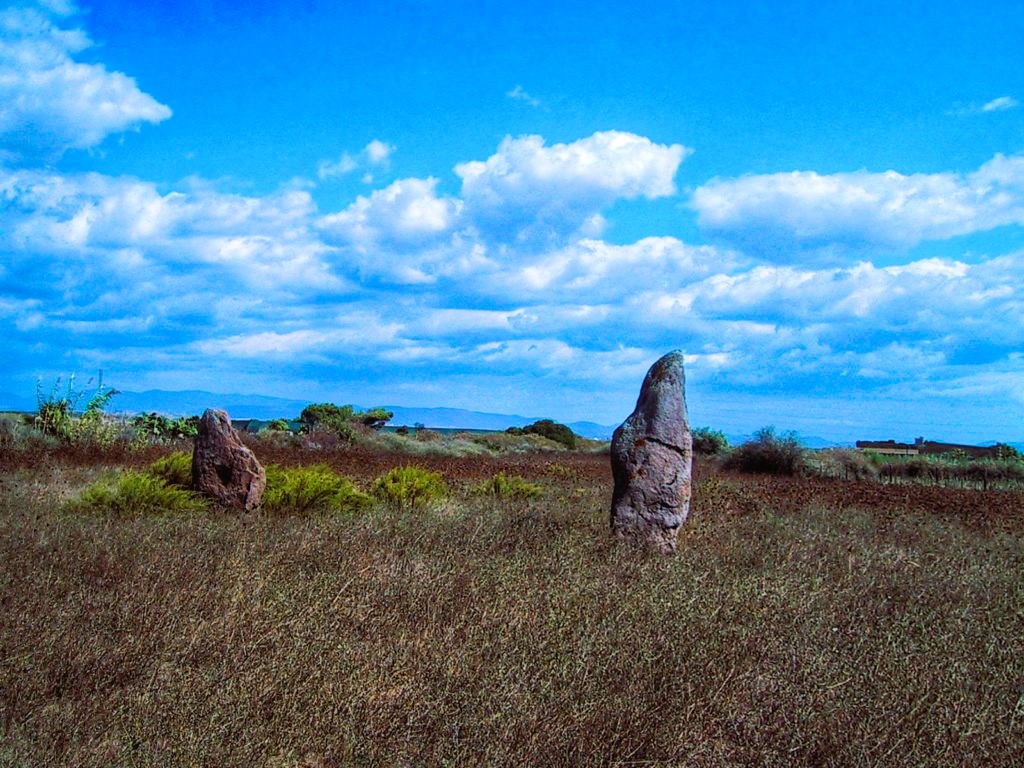
The legend of "sa perda Iddocca", "the Iddocca stone", is also well known.
Another famous tale concerns “sa perda Iddocca”, the Nuragic queen who, devastated by the death of her daughter, hurled stones from a nuraghe and ended up petrified by grief herself.
The "giants' tombs": homes of ogres and collective burials
Structure and actual function
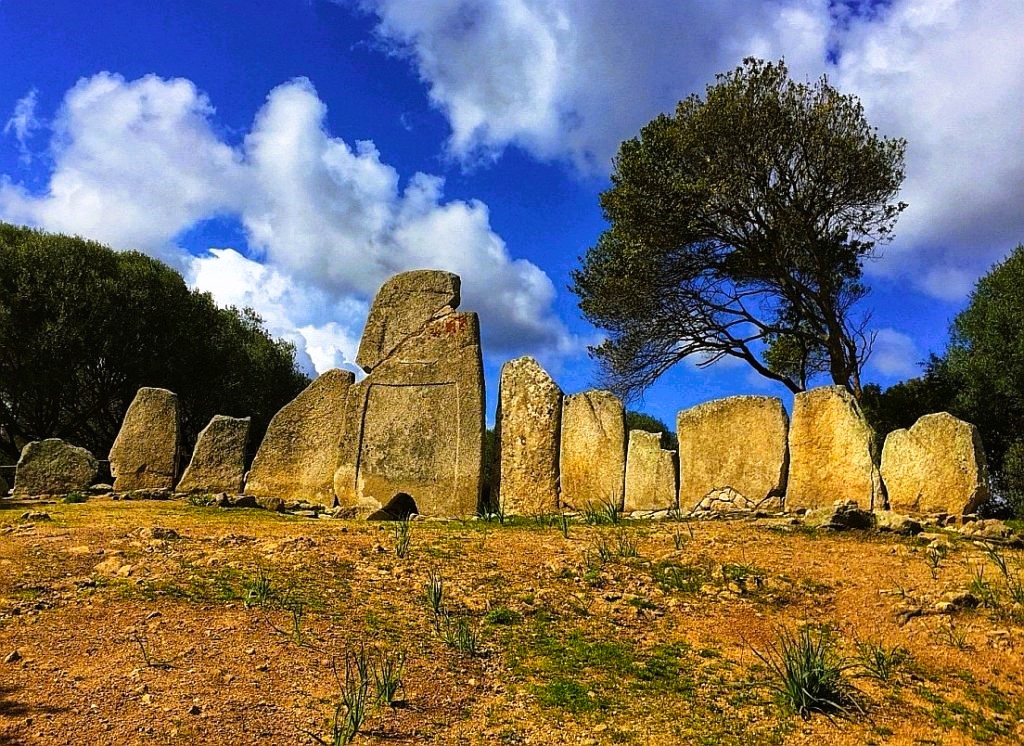
Between 1800 and 1000 BC, alongside the reused domus de janas, a new type of burial site emerged: the tombs of the giants. Up to 30 metres long, they feature a long internal corridor and a monumental exedra built with vertical slabs or blocks using the isodomic technique.
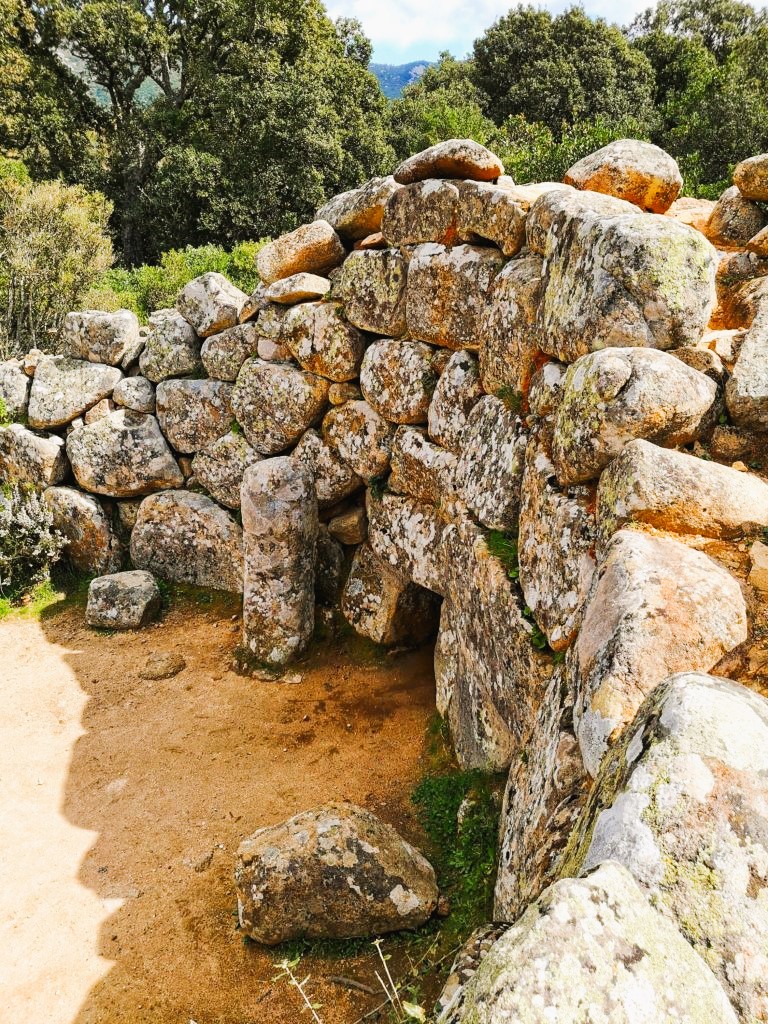
Seen from above, these monuments resemble a bull's head or, according to recent theories, a female uterus. Next to the structure, there are often betili, sacred stones similar to menhirs. An extraordinary example of this is the giants' tomb of "Is Concias".
The myth of the giants
In popular imagination, nuraghi and giants' tombs were "sa domu e s'orku", the home of the ogre: places inhabited by gigantic creatures. The cyclopean dimensions of the monuments and the discovery of bones (animal and human) fuelled the idea that they were the remains of man-eating giants.
In recent decades, the theory of the presence of ancient giants in Sardinia has circulated, even in academic circles, but no archaeological findings support it.
Sardinia: a journey through legend and archaeology
The stories surrounding Sardinia's ancient stones are an integral part of the island's soul.
Giants, janas, saints and petrified queens are not just stories: they are an ancient way of interpreting the landscape, a bridge between past and present.
Sardinia is not just a place to observe: it is a place to listen to, experience and discover, letting yourself be guided by its myths and sacred stones.
Bibliographic references:
- Claudia Zedda, Creature fantastiche in Sardegna
- Dolores Turchi, Racconti e leggende popolari della Sardegna
- Grazia Deledda, Leggende sarde
- Paolo Melis, La Sardegna Nuragica
- Franco Laner, La Sardegna preistorica
- Franco Fresi, La Sardegna dei misteri
- AAVV, La sardegna dei sortilegi
- Gian Michele Lisai, Le incredibili curiosità della Sardegna

Roberta Carboni has been a tourist guide and art historian for more than 10 years. She lives in Cagliari and is passionate about Sardinia, which she has loved so much, all her life, which is why she has chosen to tell its story through exclusive thematic tours. In this way, she contributes to making the island known not only to those who do not yet know it, but also to the Sardinians themselves. The tours take place both within Cagliari, i.e. in the historic centre and other parts of the city, and in the surroundings of the city, going also to the south and centre of Sardinia.
Get to know Roberta Carboni better - Travel guide in Cagliari and join her thematic tours...
Discover more