 English (UK)
  Italiano

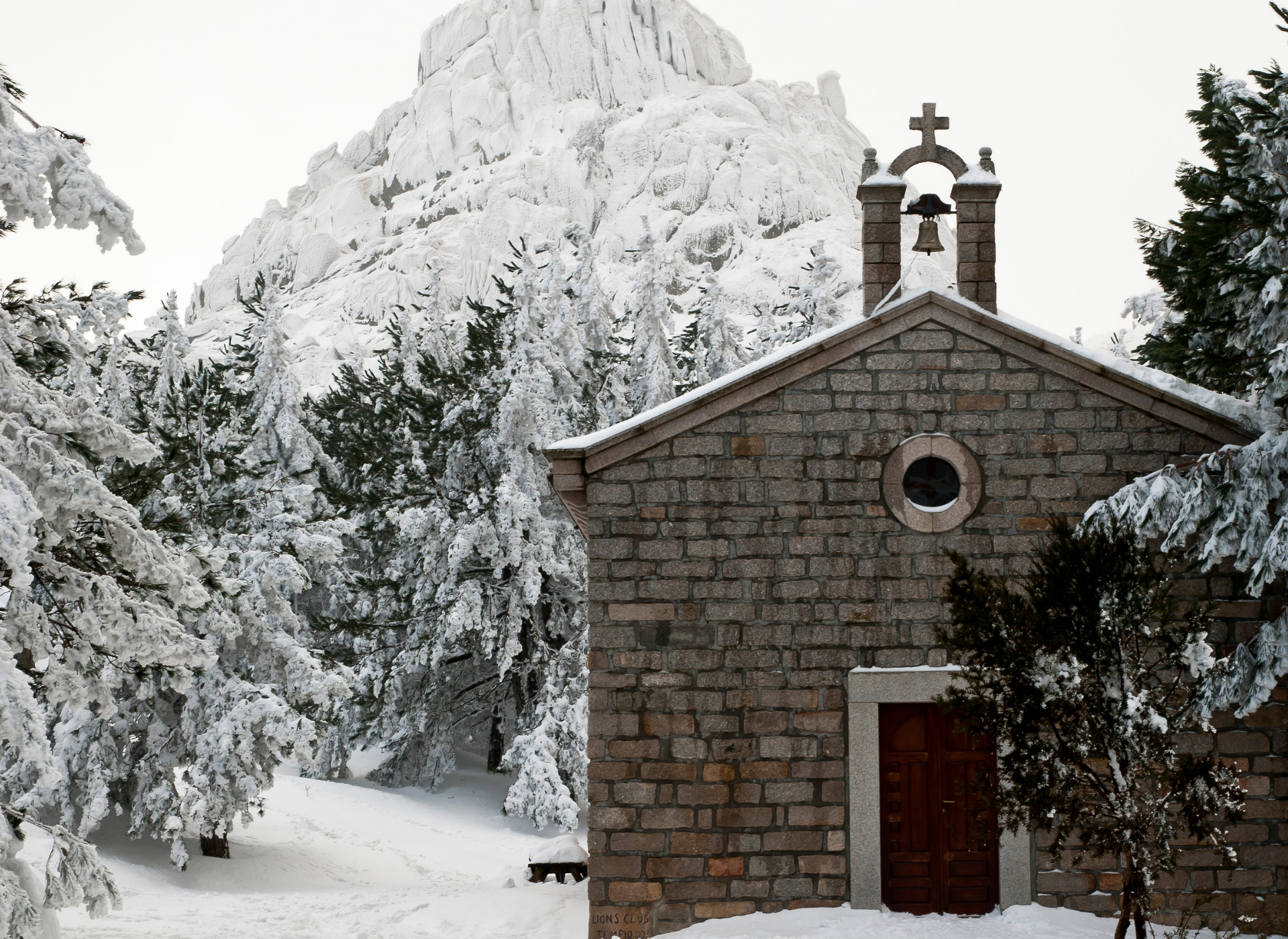
A simple, authentic story that moves readers thanks to its profound and universal values. Il Dono di Natale It is a story about feelings and small everyday gestures, evoking atmospheres of home, family and anticipation: that enchantment typical of the Christmas season.
At first glance, it might seem like a children's fairy tale, but it appeals to readers of all ages, reminding us even today how timeless Grazia Deledda's stories are.
The novella was published in 1930, three years after the Nuoro-born writer was awarded the Nobel Prize for Literature (awarded in 1927 but referring to the previous year) and six years after her death. Despite this, Il Dono di Natale continues to transport us back in time to pastoral Sardinia, to a small village blanketed in snow: a human nativity scene imbued with a magical and religious atmosphere.
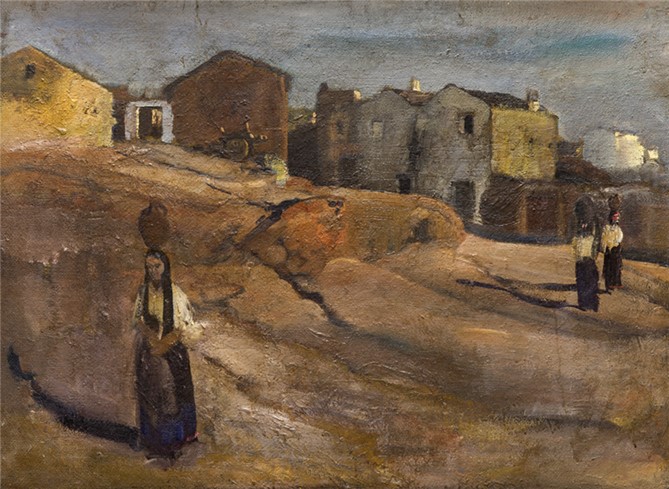
Characters and setting of the story
It is Christmas Eve. In two humble families in a small Sardinian village, there is an intense sense of anticipation, different from usual: a mysterious gift is about to arrive, destined to bring joy to both homes.
The protagonists are Felle and Lia, two children who grew up side by side in their little houses overlooking the same courtyard, 'one on each side of the courtyard, they resembled two sisters'. Felle is 'a handsome 11-year-old boy', the youngest of the Lobina children; Lia is lively, curious and full of life. Both are getting ready for the party, each in their own way of experiencing the magic of Christmas.
Felle's family, who recently lost their father, await the arrival of their daughter's boyfriend — their only child — and prepare to welcome him with a special dinner, which the whole family will attend. Lia's family, on the other hand, is enjoying a more contemplative atmosphere as they await a mysterious gift. Felle is also waiting for the traditional gift that, according to custom, the groom-to-be must send to his future wife during the dinner where he will meet her family, accompanied by his grandfather.
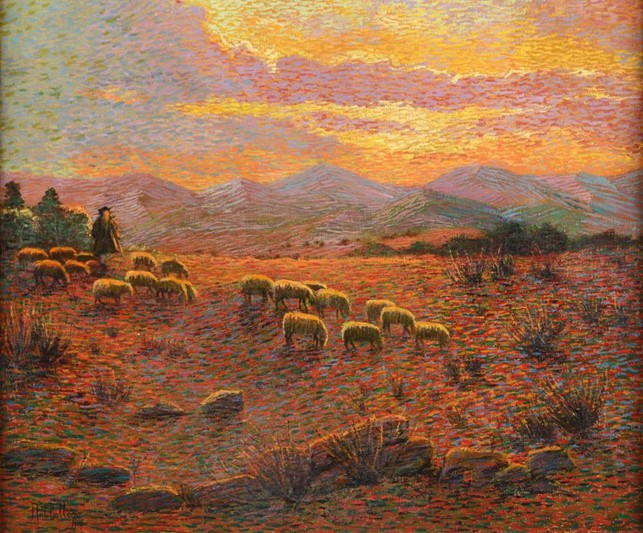
The return from transhumance
The five Lobina brothers, including Felle, return home for the festival after transhumance, temporarily leaving the sheepfolds. As they walk home, young Felle imagines how he can prove his worth and loyalty to his sister to his future brother-in-law, a handsome and very wealthy young man, as if to compensate for his family's humble circumstances. At the head of the small procession of shepherds, Felle proudly carries a bag containing the piglet intended for dinner.
“The little village was covered in snow; the black houses, leaning against the mountain, looked as if they had been drawn on white cardboard, and the church, on an embankment supported by boulders, surrounded by trees laden with snow and icicles, looked like one of those fantastic buildings that clouds draw. Everything was silent: the inhabitants seemed buried under the snow.” .
With a few effective strokes, the story paints a picture of a place suspended in time: Felle's arrival home, his greeting to Lia, the smell of cakes, the warmth of home, the rhyming songs. These images evoke a family intimacy that we often seem to forget in the hustle and bustle of everyday life.
“Her sister, tall and slender, was already dressed for the party, wearing a green brocade corset and a black and red skirt. Around her pale face she wore a silk handkerchief with flowers, and even her shoes were embroidered and decorated with bows. in short, she looked like a young fairy, while her mother, dressed all in black for her recent widowhood, also pale but with a dark face and an air of haughtiness, could have resembled a witch, were it not for the great sweetness of her eyes, which resembled those of Felle."
The magic of the Christmas atmosphere
The arrival of her boyfriend and grandfather adds to the general joy, but the ringing of bells interrupts the party: it is time for Christmas Mass. The entire village takes to the streets and gathers in the church, bringing with them the joy and hope typical of the brightest night of the year.
At her mother's invitation, Felle brings a leg of pork to her neighbours so that they too can enjoy a different dinner: a gesture of generosity that Christmas amplifies.
Inside the church, the illusion of spring continued: the altar was adorned with branches of strawberry tree with red fruits, myrtle and laurel; candles shone among the foliage and their shadows were cast on the walls as if on the walls of a garden. In a chapel stood the nativity scene, with a mountain made of cork and covered with moss: the Three Kings descended cautiously from a steep path, and a golden comet lit their way. Everything was beautiful, everything was light and joy. The powerful kings descended from their thrones to bring their love and riches as gifts to the son of the poor, to Jesus born in a stable; the stars guided them; the blood of Christ, who later died for the happiness of mankind, rained down on the bushes and made the roses bloom; it rained on the trees to ripen the fruit. This is what Felle's mother had taught her, and so it was.
But what are these eagerly awaited gifts?
So what will these gifts be, capable of bringing happiness to the two children and their families? You can only find out by reading the novella. Yet, as Deledda herself suggests, true joy lies not so much in the gift itself, but in the anticipation, the preparations, the excitement that precedes the arrival of the long-awaited moment.
Bibliographic references::
- Grazia Deledda, Il dono di Natale.

Roberta Carboni has been a tourist guide and art historian for more than 10 years. She lives in Cagliari and is passionate about Sardinia, which she has loved so much, all her life, which is why she has chosen to tell its story through exclusive thematic tours. In this way, she contributes to making the island known not only to those who do not yet know it, but also to the Sardinians themselves. The tours take place both within Cagliari, i.e. in the historic centre and other parts of the city, and in the surroundings of the city, going also to the south and centre of Sardinia.
Get to know Roberta Carboni better - Travel guide in Cagliari and join her thematic tours...
Discover more