 English (UK)
 Italiano


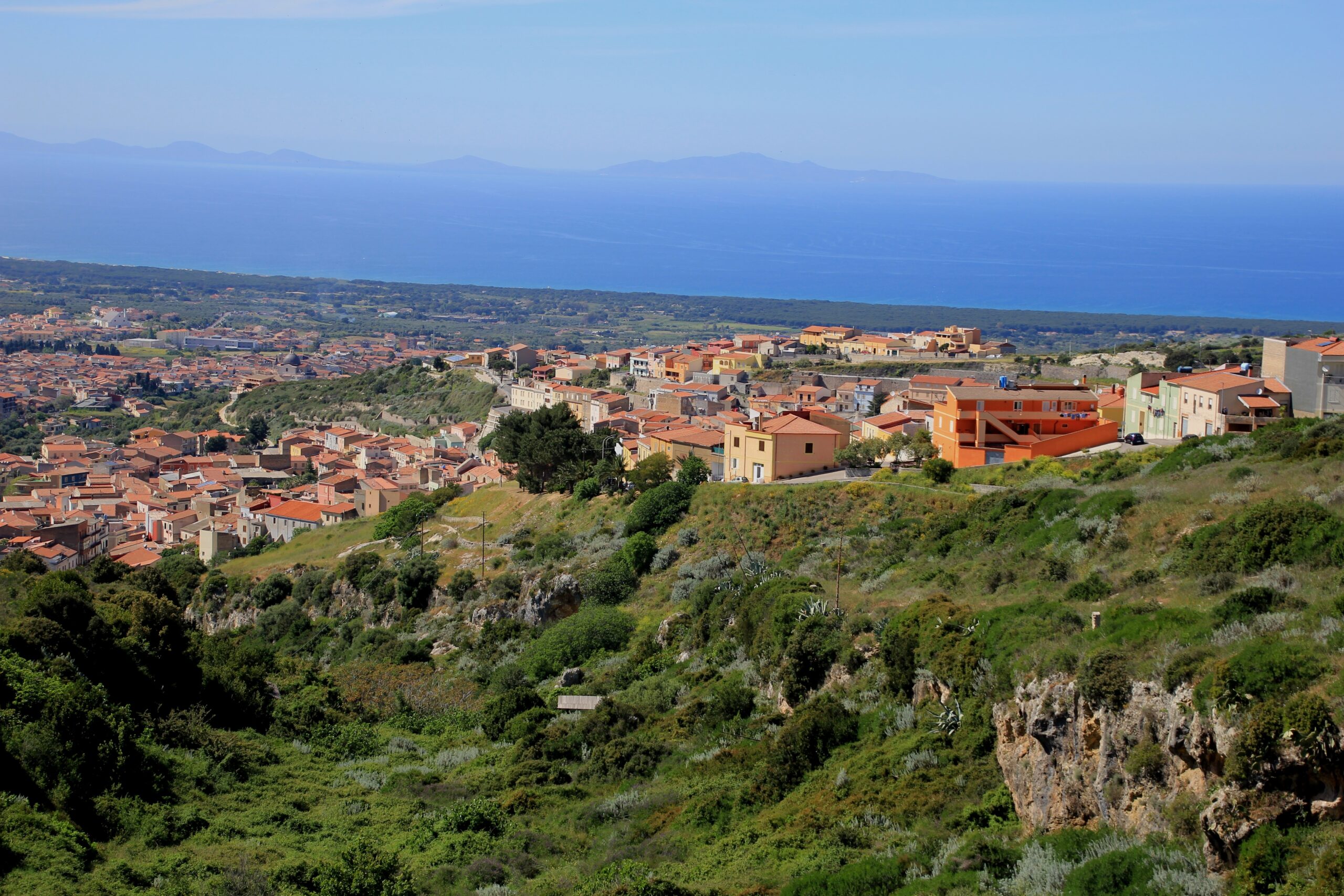
Nestled between the hills of Sennori and Sorso and the Gulf of Asinara, Romangia offers a glimpse of a Sardinia characterised by wine, rural landscapes, archaeology and little-known spots to explore at a leisurely pace.Between Sassari and the Gulf of Asinara lies a region where the cultivated hills slope gently down towards the sea.
It is Romangia, one of the historic regions of north-western Sardinia.
Here, vineyards, olive groves and orchards dot the landscape between Sennori and Sorso, whilst just a few kilometres separate the towns from the beaches of the Gulf of Asinara.
A compact area, which lends itself particularly well to being explored at a leisurely pace: moving from one village to a wine cellar, from an archaeological site to the seaside.
(Cover image: panoramic view of Sennori and Sorso – By Gianni Careddu – Own work, CC BY-SA 4.0 – File: https://commons.wikimedia.org/w/index.php?curid=48669758#Licensing. – Licence: https://creativecommons.org/licenses/by-sa/4.0/)
✅ Where is Romangia?
Romangia is situated in the north-west of Sardinia, on the outskirts of Sassari and overlooking the Gulf of Asinara.
Defining its boundaries, however, requires a slight clarification.
Historical and geographical sources do not always agree on the same boundaries. Sorso and Sennori represent the historical heart and identity of Romangia, whilst over the centuries the territory has also included villages that no longer exist and areas that now form part of the surrounding regions.
The wine-growing area of the Romangia IGT is, however, more extensive and now encompasses the municipalities of Castelsardo, Osilo, Sennori, Sorso and Valledoria.
Two distinct regions, then, united by a strong rural and wine-growing tradition.
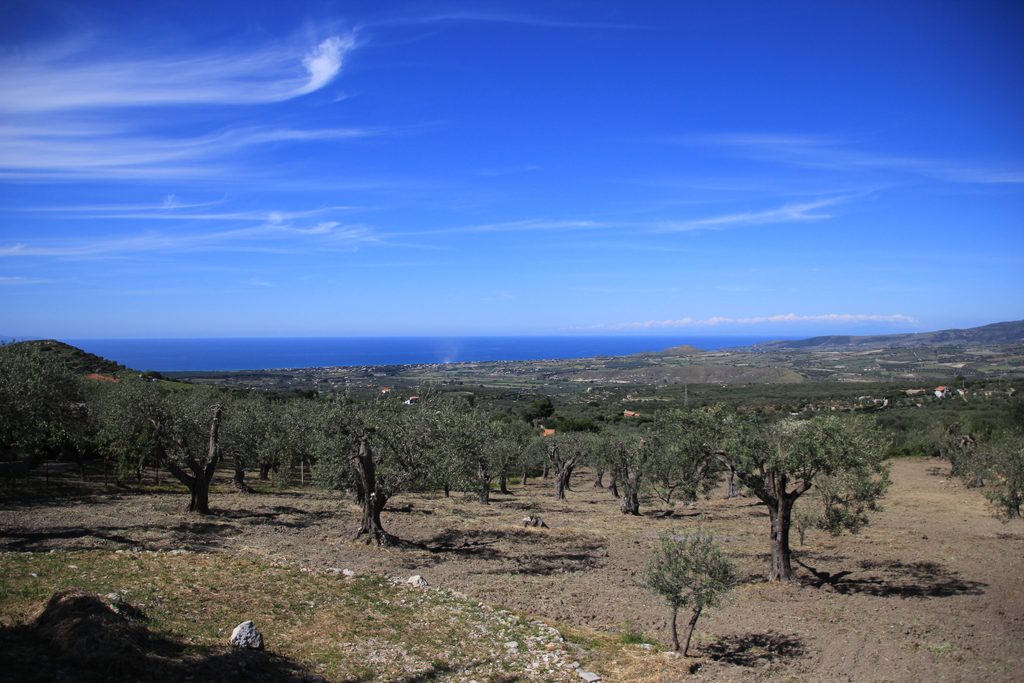
✅ Sennori, a balcony overlooking the Gulf of Asinara
Nestled in the hills a few kilometres from Sassari, Sennori overlooks a landscape of vineyards, olive groves and orchards that stretches towards the Gulf of Asinara.
The village retains a strong agricultural identity, as well as its craft and cultural traditions: from the art of basket-weaving to elaborate traditional costumes.
The area is home to significant archaeological sites, ranging from the domus de janas to nuraghi, from the tombe dei giganti (giants’ tombs) to sites linked to the ancient cult of water.
A stroll through the village, looking out towards the gulf, is enough to give you a sense of one of Romangia’s defining features: the seamless connection between the hills and the sea.
✅ Sorso, from the countryside to the sea
A few kilometres further down, Sorso runs alongside the Romangia as it flows towards the coast.
Around the town, the landscape is still dominated by vineyards and olive groves; continuing towards the Gulf of Asinara, you reach Marina di Sorso and Platamona, along a stretch of coastline characterised by beaches, dunes and Mediterranean vegetation.
Near the Platamona pond, footpaths and viewing points also allow visitors to explore a wetland habitat frequented by numerous species of waterbirds.
It is one of the most interesting aspects of this small area: within a few kilometres, you can go from the countryside to the seaside.
✅ A land that has been inhabited for millennia
Romangia is not just about the landscape.
The area contains evidence of human settlement dating back to very ancient times, from the pre-Nuragic and Nuragic periods right through to the Roman and Medieval eras.
In the Sennori area, there are documented examples of domus de janas, nuraghi and tombe di giganti, whilst in the Sorso area there are archaeological sites such as the nuragic sanctuary of Serra Niedda.
This stratification allows us to view the Romangia as a landscape shaped over time, in which agriculture, settlements and transport routes have left traces that are still recognisable.
✅ Geridu, a medieval village that has re-emerged from the ground
One of the most fascinating examples is Geridu, in the countryside around Sorso.
Mentioned in medieval sources as early as the 12th century, it was one of the most populous towns in Romangia before falling into decline and being abandoned in the 15th century.
Archaeological excavations have unearthed dwellings and everyday objects, enabling us to reconstruct aspects of life in a medieval rural community.
The site is particularly important because the Ministry of Culture describes it as the only abandoned medieval village to have been extensively excavated in Sardinia.
A place that adds another dimension to the journey: not just observing the landscape, but understanding who lived there centuries ago.
Access to the archaeological site and the associated guided tours are organised in collaboration with the Biddas – Museum of Sardinia’s Abandoned Villages, which is housed within the Palazzo Baronale di Sorso (Baronial Palace in Sorso).
✅ Romangia, land of wine
It is difficult to describe Romangia without mentioning its vineyards.
The hilly landscape of Sorso and Sennori has historically been linked to vine-growing, and even today wine remains one of the region’s most recognisable features.
This is also where the Moscato di Sorso-Sennori DOC (a Controlled Designation of Origin wine) is produced, with a production area covering the territories of both municipalities.
Alongside the DOC designation, there is the IGT Romangia (Typical Geographic Indication), whose production area also extends to the territories of Castelsardo, Osilo and Valledoria.
Visiting a winery therefore offers more than just a tasting: it means meeting people, exploring the vineyards and understanding the relationship between the wine and the landscape in which it is produced.
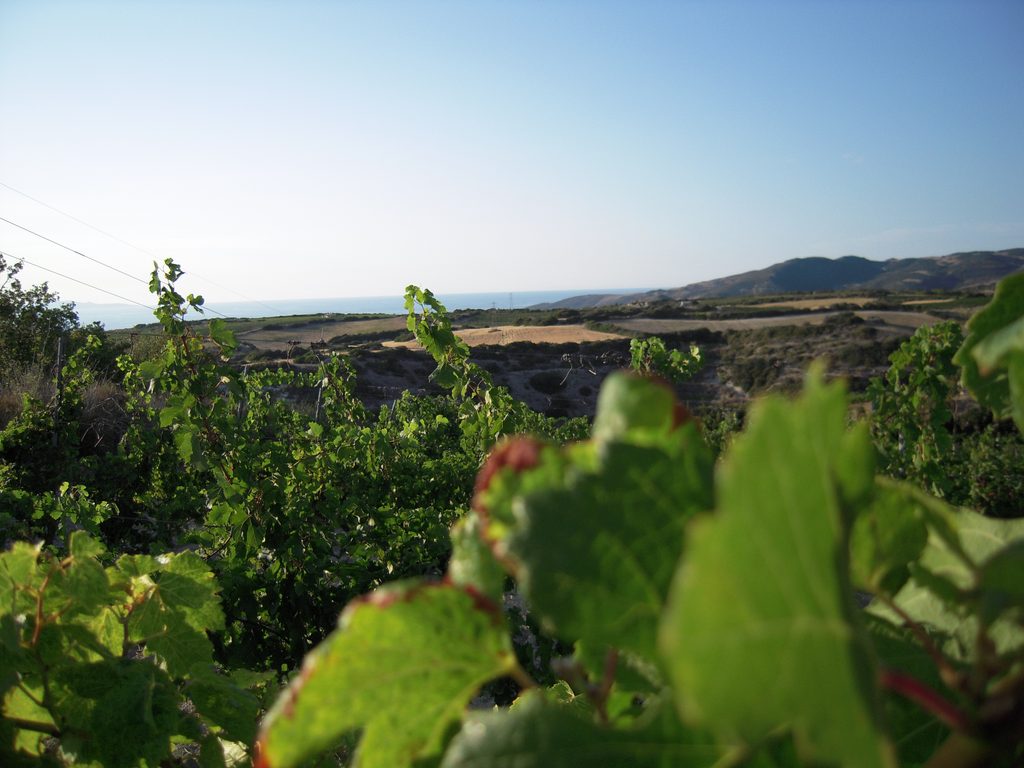
✅ Cantina Sorres: the region in a glass
In Sennori, Cantina Sorres was founded by sisters Laura and Delia Fiori.
Organic wines, tastings and vineyard experiences offer a way to discover the Romangia region through the people who continue to cultivate it and share its story.
👉 🔗 Discover the Sorres Winery in Sennori.
✅ How to experience Romangia
Romangia does not necessarily require a tight itinerary.
It can be explored in a day, but it’s worth spending more time there.
You can start in the hills of Sennori, pass through the vineyard-dotted countryside, stop off at a winery and carry on towards Sorso.
From here, the journey can continue towards Marina di Sorso and Platamona, or you can step back in time by following the archaeological and medieval traces in the area.
The central theme remains the same:
to move from the landscape to the people, and from the people to the stories that the landscape holds.
✅ Romangia beyond the summer
The sea and beaches make a summer visit a natural choice, but Romangia can be explored all year round.
Spring brings colour back to the countryside; autumn draws attention back to vineyards, wine and local produce; the cooler months are ideal for spending more time exploring villages and cultural heritage.
It is precisely outside the peak summer season that another aspect of the area’s character becomes most apparent:
rural, cultural and food and wine-related aspects.
✅ Frequently Asked Questions about Romangia
✔️ Where is Romangia?
Romangia is situated in north-western Sardinia, in the area overlooking the Gulf of Asinara and close to Sassari. Sorso and Sennori form the heart of its history and identity.
✔️ Which towns are part of Romangia?
The boundaries vary depending on the criteria used. Sorso and Sennori form the heart of the historic region; some territorial definitions also include other surrounding areas. The production area for the Romangia IGT, on the other hand, comprises Castelsardo, Osilo, Sennori, Sorso and Valledoria.
✔️ What’s there to see in Romangia?
Among the most characteristic attractions are Sennori and its hilly landscape, Sorso, Marina di Sorso and Platamona, the Platamona pond, and the area’s archaeological and medieval sites, including Geridu.
✔️ Why is Romangia associated with wine?
Viticulture is one of the historical features of the local landscape. Sorso and Sennori are also the production area for Moscato di Sorso-Sennori DOC, whilst a wider area in the north-west is recognised under the Romangia IGT designation.
✅ For further reading
Sennori
Sorso
Cantina Sorres
Porto Torres
Golfo dell’Asinara / Platamona
✅ Sources
- Regione Autonoma della Sardegna – Regional Landscape Plan, documentazione sulle regioni storiche e sulla Romangia.
- Sardegna Agricoltura – Laore Sardegna, production regulations and information on Romangia IGT and Moscato di Sorso-Sennori DOC.
- Sardinia Tourism – Region of Sardinia, information sheets on Sennori, Sorso and Marina di Sorso.
- Visit Sorso.com, the medieval village of Géridu.
- Comune di Sennori, historical documents on the Curatoria of Romangia.
AI Disclosure
This content was produced by Antonio Casu with the support of OpenAI’s artificial intelligence tools (ChatGPT) for research, source analysis and editorial support, under the author’s supervision and responsibility.