 English (UK)
  Italiano


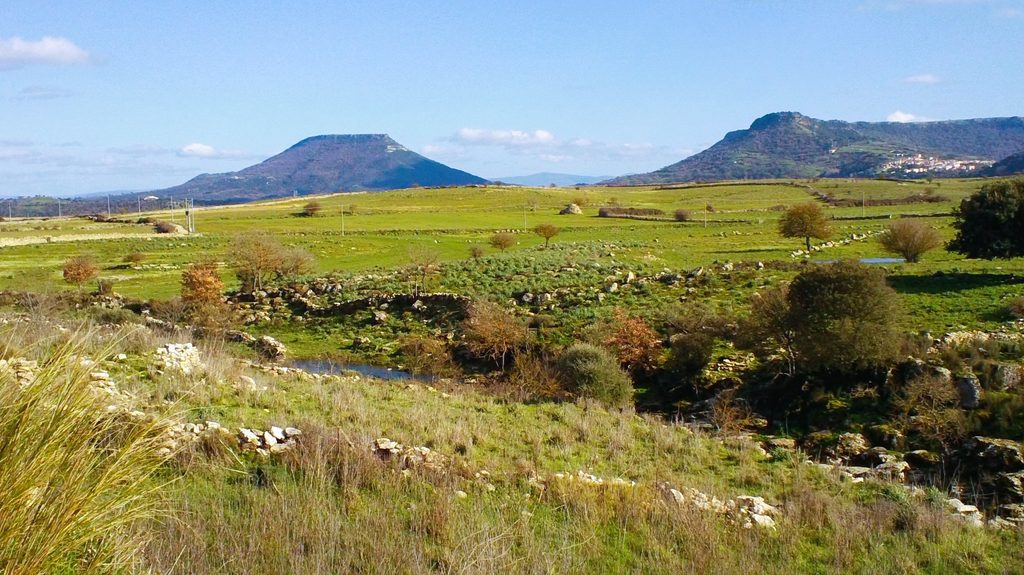
There is a Sardinia where ancient volcanoes shape the horizon, nuraghi and Domus de Janas dot the countryside, and small Romanesque churches bear witness to the Middle Ages.
It is Meilogu, a historic region of Logudoro, in the north-west of the island.
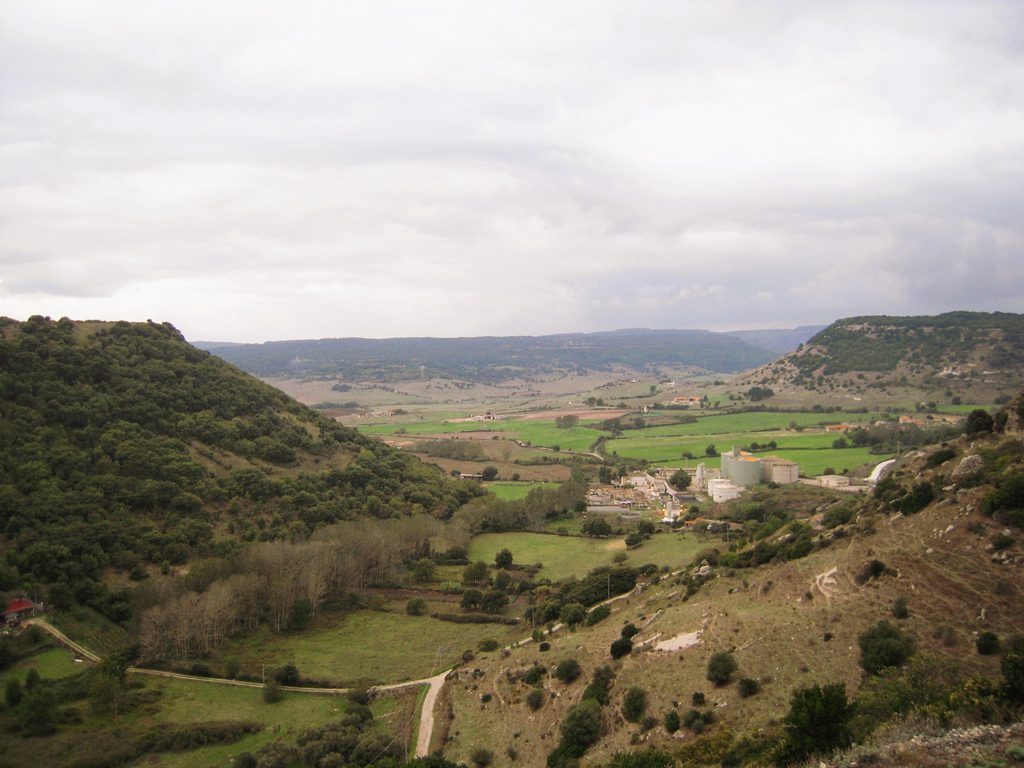
A rural landscape characterised by basalt hills, pastures, small villages and an extraordinary concentration of archaeological sites.
Here, a journey can span thousands of years in just a few kilometres.
From the prehistoric burial sites of Sant’Andrea Priu and Cheremule to the monumental Nuragic architecture of Santu Antine, and on to San Pietro di Sorres and the small medieval churches dotted across the countryside.
Meilogu is not just a place to pass through.
This is a Sardinia best explored at a leisurely pace.
✅ Where is Meilogu?
Meilogu is a historical and geographical region in north-western Sardinia and forms part of the larger Logudoro.
Its name derives from the medieval Meiulocu, which can be traced back to the expression ‘middle place’, linked to the territory’s position within the ancient Giudicato of Torres.
Historically, fifteen municipalities are considered to belong to the Meilogu:
Banari, Bessude, Bonnanaro, Bonorva, Borutta, Cheremule, Cossoine, Giave, Mara, Padria, Pozzomaggiore, Semestene, Siligo, Thiesi e Torralba.
A landscape consisting mainly of small towns, countryside and landscapes that still retain a strong rural character.
✅ Sardinia’s extinct volcanoes
Even more than the monuments, it is the landscape that tells the story of Meilogu.
Millions of years of volcanic activity have left behind conical hills, basalt plateaus, ancient craters and rocky outcrops that make this part of Sardinia instantly recognisable.
Among the most distinctive hills are Monte Santo and Monte Pelao, whilst the landscape around Siligo preserves some of the most evident traces of ancient volcanic activity.
Today, these volcanoes are dormant.
But they have helped to shape a landscape in which nature and human presence seem to constantly intertwine.
And it is precisely amongst these hills and valleys that one of the island’s richest archaeological heritage sites is concentrated.
✅ Before the nuraghi: the Domus de Janas of Meilogu
The history of Meilogu dates back to well before the Nuragic civilisation.
This is evidenced by the numerous Domus de Janas, tombs carved into the rock by Sardinia’s prehistoric communities.
Since 2025, this heritage site has taken on an international dimension: the serial site “Funeral traditions in prehistoric Sardinia – the Domus de Janas” has been inscribed on the UNESCO World Heritage List.
And some of its most important components are to be found in the Meilogu itself.
✅ Sant’Andrea Priu: a city of the dead carved out of the rock
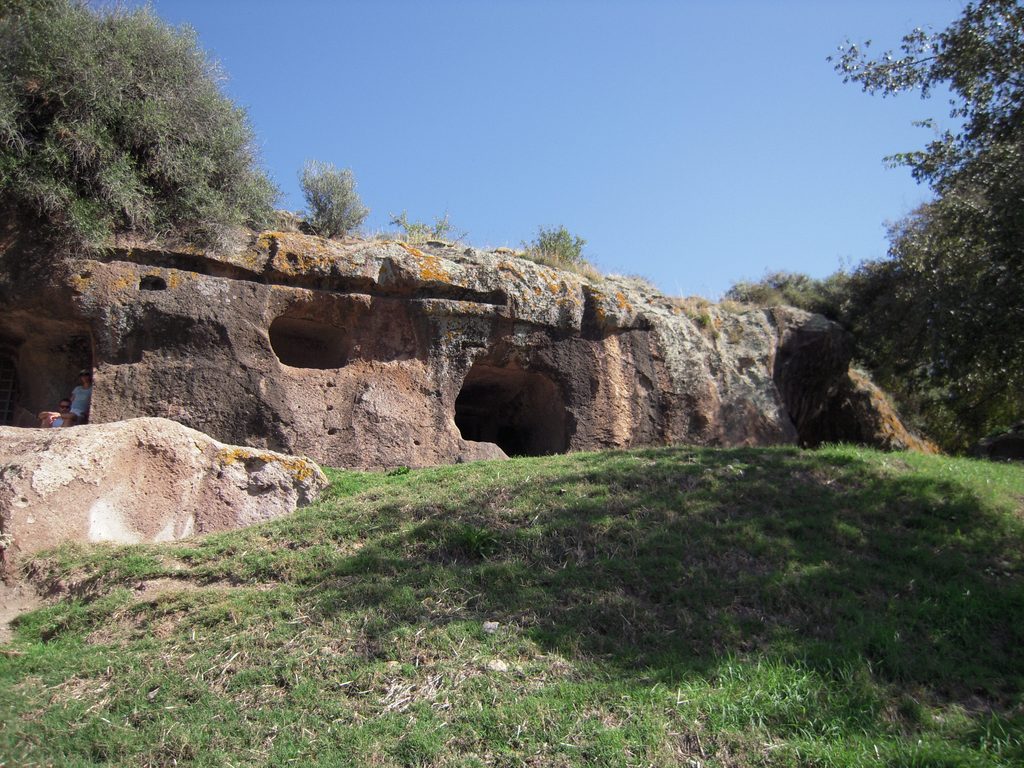
In the countryside around Bonorva, the Sant’Andrea Priu Necropolis is one of Sardinia’s most spectacular prehistoric burial sites.
It comprises around twenty Domus de Janas carved into a large outcrop of trachyte rock.
The most famous is the Tomba del Capo, comprising eighteen chambers and considered one of the largest underground burial sites in the Mediterranean.
But Sant’Andrea Priu also tells us something more.
Some of the rooms were reused in subsequent centuries, and one of the tombs was converted into a place of Christian worship, leaving traces on the walls of eras that were very far apart in time.
One place, thousands of years of history.
✅ Cheremule: signs and symbols carved in stone
At Cheremule, the Petroglifi Park preserves another extraordinary prehistoric burial landscape.
The necropolises of Museddu, Tennero and Mattarigotza comprise dozens of rock-cut tombs.
Here, attention is drawn above all to the engraved symbols and anthropomorphic depictions that have made the site one of the most fascinating places in Sardinian prehistory.
These necropolises, too, form part of the UNESCO serial site dedicated to the Domus de Janas.
✅ Mandra Antine: the painted tomb
In the area of Thiesi, the Mandra Antine necropolis contains four burials dating from the late Neolithic to the Eneolithic periods.
One of them, however, is exceptional.
The so-called Painted Tomb features prehistoric polychrome decorations, an extremely rare phenomenon in the Mediterranean.
Red, black and other decorative motifs transform the interior of the tomb into one of the most enigmatic sites in Sardinian archaeology.
A place that is small in size but immense in cultural significance.
✅ The Valley of the Nuraghi
Then the landscape takes on a different feel.
The Meilogu is home to one of the largest concentrations of Nuragic remains in Sardinia, so much so that the area around Torralba is known as Valle dei Nuraghi.
Nuraghi, villages and tombe di Giganti (Giants’ tombs) dot the countryside, bearing witness to an organised and widespread human presence.
At the heart of this system stands an extraordinary monument.
✅ Santu Antine: the magnificent Nuragic architecture
In the countryside around Torralba stands the Nuraghe Santu Antine, also known as Sa Domu de su Re, ‘the king’s house’.
It is one of the most impressive and elegant nuragic complexes in Sardinia.
The central tower still stands at a height of approximately 17.5 metres, but it may originally have reached a height of around 24 metres. Surrounding the keep is a three-lobed bastion criss-crossed by corridors, staircases and passageways, built with remarkable technical skill.
Around the fortress, there are also the remains of a village that was inhabited throughout various periods.
Santu Antine is not just a monument to look at.
It is one of those places where the architecture gives you an immediate sense of the sophistication achieved by the Nuragic civilisation.
And to gain a better understanding of the surrounding archaeological landscape, the visit can continue at the Logudoro-Meilogu Nuraghi Valley Museum, in the centre of Torralba.
✅ From the Nuragic era to the Middle Ages
Part of the appeal of Meilogu lies in the chance to step back in time completely without having to travel very far.
Scattered amongst the countryside and small villages are, in fact, some important examples of Sardinian medieval architecture.
✅ San Pietro di Sorres
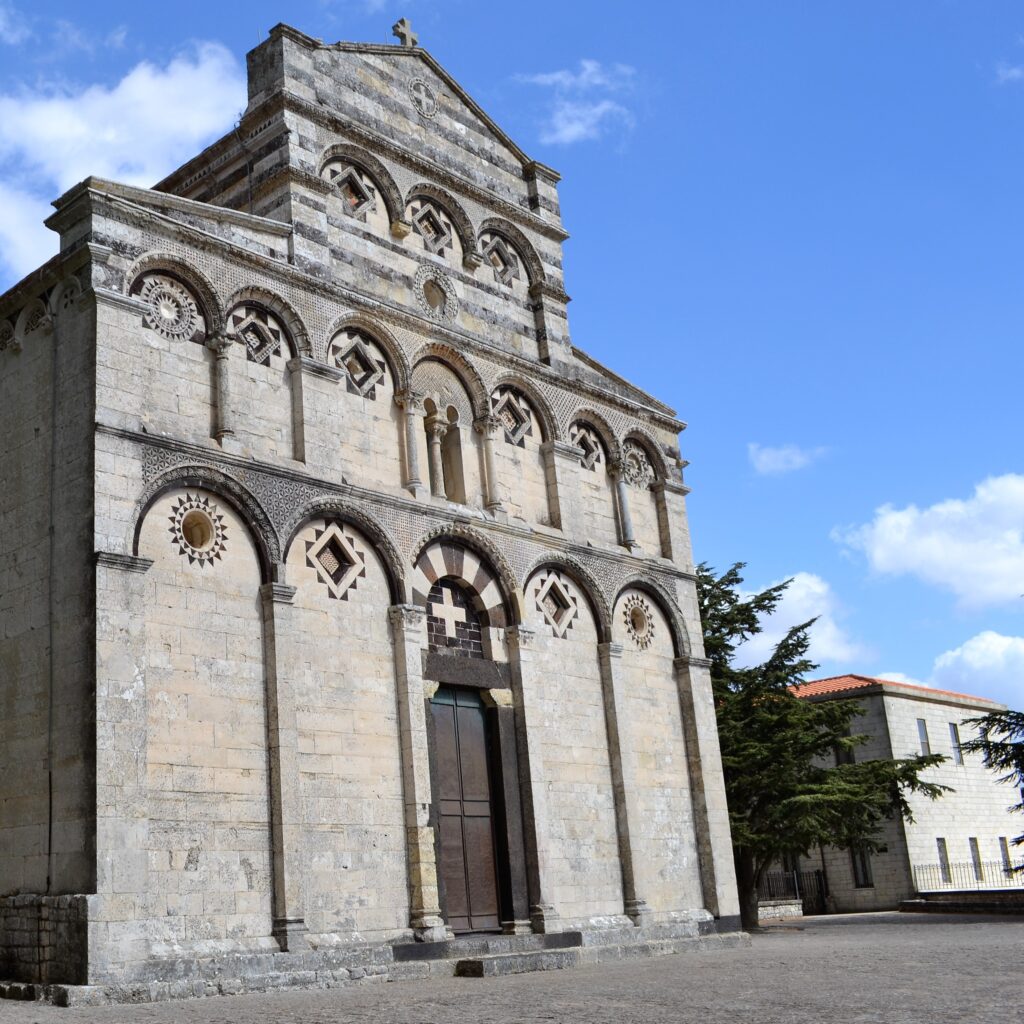
Above Borutta, the Basilica of San Pietro di Sorres overlooks the surrounding area from the top of the hill.
Built between the 12th and 13th centuries, the ancient cathedral is one of the most important examples of Romanesque architecture on the island.
The stone’s distinctive two-tone colour scheme accompanies visitors from the façade into the interior spaces.
But Sorres is not just about memory.
Since 1950, the hill has once again been home to a Benedictine community, and the monastery continues to be a place of prayer, culture and hospitality.
A little further down, the Grotta di Ulàri traces the history of Borutta back to prehistoric times.
Once again, within a very small space, the Meilogu brings together eras that are worlds apart.
✅ San Nicolò di Trullas
In the countryside around Semestene, the small Romanesque church of San Nicolò di Trullas preserves another important chapter in Sardinian medieval history.
Linked to the Camaldolese monastic presence in the 12th century, it houses a precious cycle of medieval frescoes.
It is one of those places that really capture the essence of Meilogu: monuments of great value that emerge almost suddenly from the silence of the countryside.
✅ The villages: Meilogu, a place to savour at a leisurely pace
However, limiting ourselves to the major archaeological sites would mean telling only part of the story of the region.
Meilogu consists mainly of small villages.
Borutta, Torralba, Cheremule, Semestene, Siligo, Bessude, Banari, Bonnanaro, Bonorva, Thiesi and the other villages are home to churches, fountains, traditional architecture, festivals and local traditions.
Not all of them necessarily take a whole day.
And that is precisely the point.
The Meilogu lends itself to a form of tourism consisting of short, nearby stops, where a visit to an archaeological site can be followed by a stroll through a village, a visit to a country church, a walk through a volcanic landscape or an opportunity to discover local produce.
Here, the distance between one discovery and the next is often measured in just a few kilometres.
✅ A rural area that is still thriving
Pastures and agro-pastoral activities have had a profound impact on the landscape and economy of Meilogu.
Sheep farming and dairy processing have played a particularly important role in the economic history of towns such as Thiesi and continue to form part of the region’s productive identity.
But the Meilogu should not be reduced to a postcard image of rural Sardinia.
Alongside traditional industries, there are cultural, hospitality, craft and tourism initiatives that are seeking to create new opportunities based on the local heritage.
The challenge is to transform this extraordinary concentration of resources into a region that is increasingly easy to explore and enjoy.
✅ A tour of Meilogu: how much time to allow
You can explore the Meilogu in a day.
But to really understand it, it’s best to give it a bit more time.
🔸 If you have a day
You can plan an itinerary between Santu Antine, Borutta and San Pietro di Sorres.
It is a concise journey that takes you from the Nuragic civilisation through to the Middle Ages and the contemporary Benedictine presence.
🔸 If you have two days
Aggiungi Bonorva e Sant’Andrea Priu, entrando nel mondo delle Domus de Janas e della Sardegna prenuragica.
And so the journey begins to tell a much longer story.
🔸 If you have three days
Spend the third day exploring Cheremule, Thiesi and the volcanic landscape of Meilogu, choosing which sites to visit based on opening times and access arrangements.
At this point, you won’t just be visiting a few monuments.
You’re about to start exploring a region.
✅ When to visit Meilogu
Meilogu can be explored all year round.
Spring and autumn are particularly well suited to combining archaeology, villages and the countryside, thanks to temperatures that are generally more favourable for outdoor visits.
Summer offers the chance to explore the local area as part of a wider journey through northern Sardinia, whilst winter lends the archaeological sites and the countryside a completely different atmosphere.
Before setting off, it is always advisable to check opening times, access arrangements and the availability of guided tours, particularly for lesser-known sites.
✅ Why visit Meilogu
Because there isn’t a single monument here that can tell the whole story.
It is the whole that makes the difference.
✔ Extinct volcanoes.
✔ The Domus of Janas.
✔ The Valley of the Nuraghi.
✔ Santu Antine.
✔ Romanesque churches.
✔ The monasteries.
✔ The small villages.
✔ The rural landscape.
Meilogu is one of those areas where Sardinia’s rich history is particularly evident.
There’s no need to rush from one attraction to the next.
You need to give yourself time to make the connections between places.
Because sometimes, it is in that ‘in-between place’ that you find exactly what was worth looking for.
🔶 Frequently Asked Questions
✅ Where is Meilogu?
Meilogu is a historic region of Logudoro, in north-western Sardinia. The area lies within the present-day province of Sassari and is easily accessible via the SS 131.
✔️ What does ‘Meilogu’ mean?
The name derives from the medieval Meiulocu and is generally interpreted as ‘middle place’, in reference to the area’s location within the ancient Giudicato of Torres.
✔️ What are the main places to visit in Meilogu?
Among the most significant sites are the Nuraghe Santu Antine in Torralba, the Necropoli di Sant’Andrea Priu in Bonorva, the Petroglifi Park in Cheremule, Mandra Antine in Thiesi, San Pietro di Sorres in Borutta and San Nicolò di Trullas in Semestene.
✔️ Are there any UNESCO sites in Meilogu?
Yes. Since 2025, a number of necropolises in the area have been part of the UNESCO serial site “Funeral traditions in prehistoric Sardinia – the Domus de Janas”. These include Sant’Andrea Priu and parts of the Parco dei Petroglifi.
✔️ What is the Valley of the Nuraghi?
This is the Meilogu area, particularly around Torralba, which is characterised by an exceptional concentration of Nuragic monuments. Its most famous site is the Nuraghe Santu Antine.
✔️ How many days do you need to visit Meilogu?
One day is enough to see some of the main sights, but two or three days allow you to combine archaeology, villages, Romanesque architecture and the countryside without turning the trip into a rush.
🔶 Sources
- Autonomous Region of Sardinia – documentation on the historic area of Meilogu
- Autonomous Region of Sardinia – SardegnaTurismo: The Meilogu Volcanic Craters
- SardegnaTurismo: Nuraghe Santu Antine e Torralba
- SardegnaTurismo: Necropoli di Sant’Andrea Priu
- SardegnaTurismo: Necropoli di Mandra Antine
- SardegnaTurismo: San Pietro di Sorres
- SardegnaTurismo: Romanesque itineraries in Logudoro-Meilogu
- UNESCO World Heritage Centre – Funerary Tradition in the Prehistory of Sardinia – The domus de janas
🔶 To find out more
👉 Borutta: what to see in San Pietro di Sorres – history and nature
👉 Guest House of the Abbey of St Peter of Sorres
👉 San Pietro di Sorres: 70 years of monastic life
AI Disclosure
This article was produced by Antonio Casu with the support of OpenAI’s artificial intelligence tools (ChatGPT) for research, source analysis and drafting. The content has been reviewed and edited by a human editor. Editorial responsibility for the publication lies with Sardegna Country.